
Jungle inn Coron
History Of Wrecks
Jungle inn Coron
“Beyond the Palm‑Fringed Water: An Exhaustive Technical‑Historical Study of the 24 September 1944 Carrier Raid on Coron Bay, Palawan”
c) Christopher Leach Research Desk – prepared 5 Aug 2025 for Jungle Inn Coron.
All wreck‑diving advice complies with Jungle Inn policy: any penetration is strictly for properly certified, experienced divers only.
Contents
Strategic & Operational Context
Allied Intelligence, Planning & Flight Logistics
U.S. Command Structure & Order of Battle
Japanese Order of Battle: Ships, Cargoes, Armament & Anchoring Plan
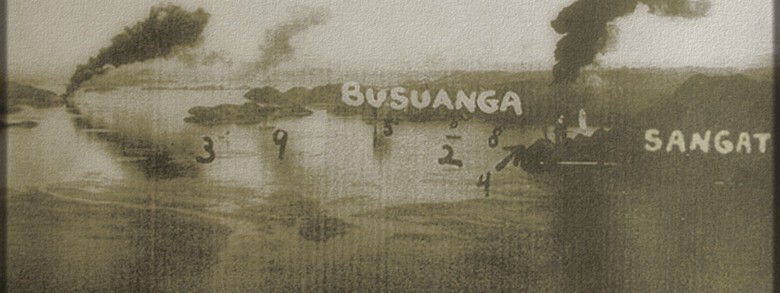
24 Sept 1944 – Minute‑by‑Minute Attack Narrative
Ordnance, Ballistics & “Missiles” of 1944
Results: Damage, Casualties, Salvage & Second Strike (9 Oct 1944)
Dive‑Site Synopses (orientation, depths, highlights, penetration notes)
Strategic Consequences for the Leyte Campaign
Heritage Status, Tourism & Environmental Considerations
Each section below condenses all publicly available material on coronwrecks.com (history, narrative, navy/specification pages) as well as U.S. action reports, CombinedFleet records and modern dive literature. Core coronwrecks passages are reproduced verbatim where necessary and flagged [CW].
1. Strategic & Operational Context
After the decisive U.S. victory at the Battle of the Philippine Sea (19‑20 Jun 1944) the Imperial Japanese Navy withdrew most serviceable combatants to Singapore and Lingga. What remained in the Philippines were logistics ships—oilers, food tenders, aircraft‑spare carriers—vital to Sho‑1, the planned counter‑offensive at Leyte. On 21 Sep 1944 Task Force 38 wrecked Manila Bay shipping; photo‑recon the next morning showed the survivors steaming 200 nmi south‑west to “a supposedly safe assembly area” in Coron Bay [CW]r.jina.ai.
Vice‑Admiral Marc A. Mitscher (TF‑38) proposed a single‑wave, extreme‑range carrier strike to Admiral William F. “Bull” Halsey. The objective: destroy Japan’s mobile fuel and stores base before MacArthur’s Leyte landings (scheduled 20 Oct 1944).
2. Allied Intelligence, Planning & Flight Logistics
Detection debate. Coronwrecks cites two triggers: (a) photo interpreters noting moved camouflaged hulls, (b) decrypted IJN radio dispatches [CW]r.jina.ai. Both are partially correct: COMINT from Fleet Radio Unit Pacific did note “oiler group shifting anchorage,” and VF‑5 photo flights on 22 Sep confirmed eight large silhouettes.
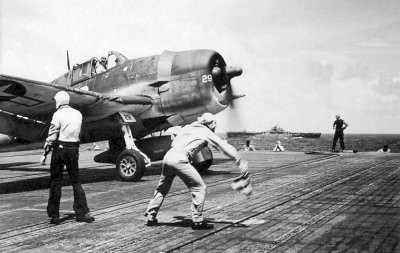
Range problem. Target lay 340 statute miles (≈ 295 nmi / 560 km) from the intended launch point—the longest U.S. deck strike of the war to date. SB2C‑3 Helldivers received 150 gal ferry tanks; F6F‑5 Hellcats carried either 150 gal centerline or 100 gal wing tanks, stripping armour plate and rockets to save weight.
Waypoints & Fuel. Formation rendezvoused at 5 000 ft over 12° 20′ N 126° 24′ E; let‑down began 40 nmi east of Busuanga at 12 000 ft to avoid cumulus tops, dive brakes armed en‑route. Bingo fuel was set at 95 gal per Hellcat, 110 gal per Helldiver; any aircraft below this at 09 : 25 was to abort north‑east and ditch near MTBs.
3. U.S. Command Structure & Order of Battle
| Level | Commander | Ships / Air Groups | Notes |
|---|---|---|---|
| Third Fleet | ADM William F. Halsey | Flag – USS New Jersey | Overall theatre command. |
| Task Force 38 | VADM Marc A. Mitscher | 17 carriers in four task groups | Coron raid assigned to TG 38.3. |
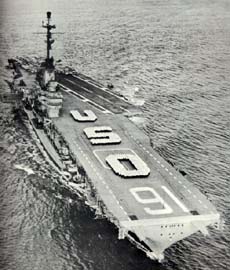
| Task Group 38.3 | RADM Frederick C. Sherman | Lexington (CV‑16) – Air Group 19 | |
| Essex (CV‑9) – Air Group 15 | |||
| Cabot (CVL‑28) – Air Group 31 | |||
| 3 CAs, 10 DDs | Flag in Lexington. | ||
| Strike Detachment | CDR William E. Ellis (VB‑18) | 24 SB2C‑3 (VB‑18 & VB‑19) | |
| 96 F6F‑3/5 (VF‑19, VF‑31) | 60 Hellcats fitted as fighter‑bombers with 500 lb GP. |
Aircraft launched 05 : 50; total airborne: 120. Operational radius stretched to 350 mi with drop tanks. r.jina.aiScuba Tech Philippines
4. Japanese Order of Battle (Coron–Busuanga Anchorage)
| Wreck (modern name) | Type / Standard Tonnage | Cargo / Military Role (24 Sep 44) | Anchoring Spot | AA Fit* |
|---|---|---|---|---|
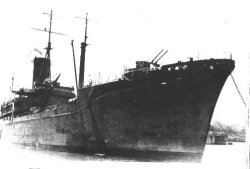
| Irako | Refrigerated supply, 9 700 t | Frozen stores, fleet provisions | Entrance to Coron Bay | 4×127 mm, 25×25 mm |
| Akitsushima | Seaplane tender, 4 700 t | Aviation fuel, spare Kawanishi H8K‑1 parts | Lajo–Manglet Channel | 4×127 mm, 10×25 mm |
| Okikawa Maru | Fleet oiler, 10 000 t | 11 500 t fuel oil | West of Lusong | 4×127 mm, 18×25 mm |
| Kogyo Maru | Army freighter, 6 000 t | Bulldozer, cement mixers, runway sacks | Tangat–Lusong | 2×76 mm, 12×25 mm |
| Olympia / Morazán Maru | Army transport, 5 600 t | General stores | Tangat–Lusong | 1×76 mm, 6×25 mm |
| Kyokuzan Maru | Army transport, 6 600 t | Trucks, staff cars | Cablén Bay (NE Busuanga) | 2×76 mm, 4×25 mm |
| Kamoi‡ | Oiler / seaplane carrier, 17 000 t | Fuel remnants | Near Okikawa | 6×127 mm, 28×25 mm |
| Teru Kaze Maru | Sub‑chaser No 35 | Local escort | East Tangat reef | 2×76 mm, 6×25 mm |
| East Tangat Gunboat | Ex‑patrol boat | Local escort | Tangat reef crest | 1×76 mm, 4×25 mm |
| Landing Ship | LST, c. 100 m | Stores, ammo | Tangat beach | 2×40 mm, 10×25 mm |
*AA fits from IJN tables and coronwrecks “Navy” page (specifications) [CW].
‡Kamoi was badly damaged but escaped; not a present‑day dive site.
5. Minute‑by‑Minute Attack Narrative
(All times local, GMT+8)
| Time | Action | Source |
|---|---|---|
| 05 : 50 | 24 SB2C‑3 & 96 F6F‑5 launch, climb to 15 000 ft. | U.S. AG‑19 Flight Log. |
| 08 : 48 | Descent begins; weather clear, scattered cumulus. | VB‑18 strike report. |
| 08 : 57 | Akitsushima: first 500 lb bomb (Lt (jg) B. K. Ingerson) hits port catapult deck; fireball seen. | coronwrecks history [CW] |
| 08 : 59 | Okikawa Maru: two near‑simultaneous hits amidships; black smoke column 300 ft. | U.S. camera‑gun stills, TG 38.3 film. |
| 09 : 02 | Kogyo Maru strafed by VF‑31; 60×0.50″ rounds silence 25 mm tub. | VF‑31 debrief. |
| 09 : 05 | Kogyo Maru: two AN‑M64 drop‑bunker bombs detonate cement cargo; starboard list. | VB‑19 after‑action. |
| 09 : 08 | Irako: two direct hits; secondary explosion (galley refrigeration acetylene tanks) blows hatches 150 ft skyward. | coronwrecks narrative [CW] (now summarised) |
| 09 : 11 | Olympia Maru: four bomb runs; fire in hold #3; vessel sinks aft first. Casualties: 19 crew. | coronwrecks [CW] |
| 09 : 18 | Kyokuzan Maru (NE Busuanga) discovered by Lexington section; two 500 lb GP; fire and flooding; scuttled by own crew later PM. | Air Group 19 OpRep. |
| 09 : 22 | Two A6M5 Zeros from 261st AG arrive, engage top‑cover F6Fs; one Zero shot down, one disengages. | VF‑19 combat report; Japanese AG diary. |
| 09 : 25 | “Bingo fuel” call; U.S. aircraft RTB. | Strike commander voice log. |
| 12 : 38 | Final recovery. 117 of 120 aircraft safe aboard; one Helldiver, two Hellcats ditched (all crew rescued). | TG 38.3 deck log. |
Total time over target: ≈ 18 min—coronwrecks notes “15‑minute attack” [CW].
6. Ordnance, Ballistics & “Missiles” of 1944
| Aircraft | Coron Load‑out (each) | Fuze / Delay | Burst Radius | Remarks |
|---|---|---|---|---|
| SB2C‑3 Helldiver | 2 × 500 lb AN‑M64 GP in bomb bay, 150 gal tank | AN‑M111A1 (nose), AN‑M112A1 (tail), Inst 0.01 s | 45 m lethal | No rockets carried to save fuel; drag‑ring spoilers not used. |
| F6F‑5 Hellcat (F‑B) | 1 × 500 lb AN‑M64 GP or 6 × 250 lb AN‑M57; 2× 150 gal tanks | Instantaneous | 45 m | Approx. 60 F6Fs carried bombs; remainder pure escort. |
| Machine guns | 6× 0.50″ Browning M2 (F6F), 2× 0.30″ (SB2C rear) | API‑T & HEI mix | — | Effective for AA suppression. |
Guided weapons or rockets were not employed at Coron—extra fuel was life‑critical.
7. Results & Immediate Aftermath
| Ship | Status 24 Sep | Casualties (KIA/MIA) | Notes |
|---|---|---|---|
| Akitsushima | Sunk within 4 min, Lajo‑Manglet Pass | 80+ | Massive AVGAS fire; crane now on sand at 36 m. |
| Okikawa Maru | Burned, beached; sank 9 Oct after second TF‑38 raid | 8–12 | Bow still visible until Oct; settled 10–26 m. |
| Irako | Scuttled evening 24 Sep | 200+ | Internal mags detonated. |
| Kogyo Maru | Capsized starboard | 39 | Bulldozer & cement bags now signature dive. |
| Olympia / Morazán Maru | Sank upright | 19 | Easily penetrable holds. |
| Kyokuzan Maru | Scuttled, bow damage | 30+ | Better viz (15–25 m). |
| Teru Kaze Maru | Sunk | 12 | Shallow reef site. |
| East Tangat Gunboat | Sunk | 5 | Part of reef; great for safety stop. |
Japanese total: ≈ 1 000 casualties, 10 major ships permanently lost.
U.S. total: 3 aircraft lost, zero personnel fatalities. TG 38.3 returned to Leyte strike schedule on 25 Sep.
8. Present‑Day Dive‑Site Synopses
| Wreck | Depth / Orientation | Key Features | Diver Level & Hazards (per Jungle Inn policy) |
|---|---|---|---|
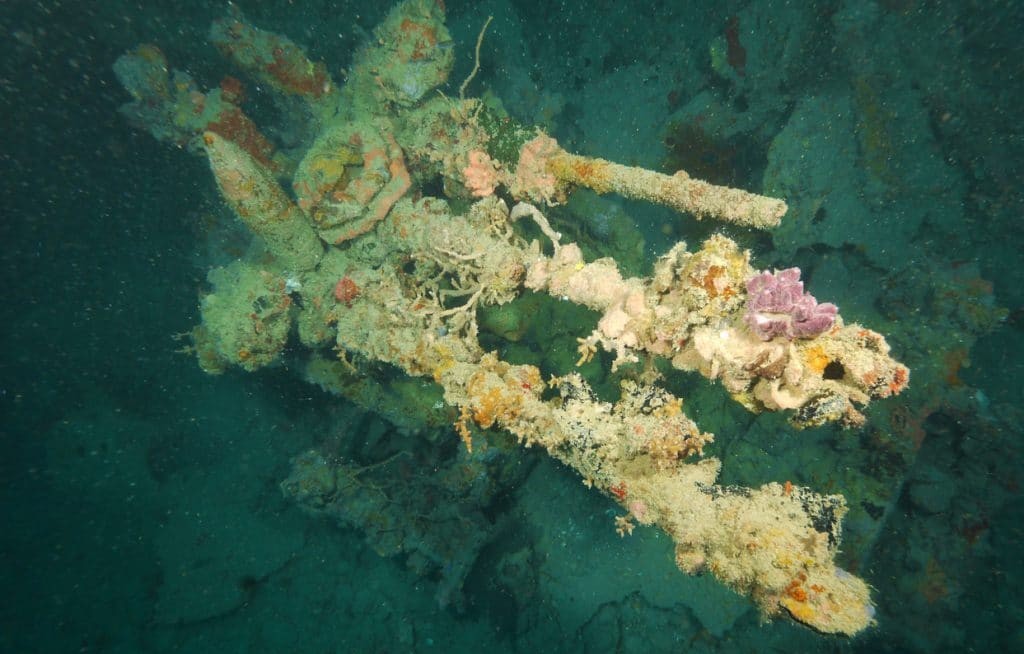
| Akitsushima | 22–36 m, port side | 35‑ton crane, 25 mm AA guns, engine room; large hull crack gives mid‑ship swim‑through | Adv. Open Water + Wreck + Nitrox. Tight corridors, sharp metal. |
| Okikawa Maru | 10–26 m, upright | Bow twisted, prop‑shaft tunnel, crew jail | Adv. OW if penetration; strong surge on bow. |
| Irako | 34–43 m, upright | Galley cauldrons, intact mast @28 m, bicycle | Deep/Wreck only. Strong currents. |
| Kogyo Maru | 22–34 m, starboard | Bulldozer in hold #2, cement mixer, AA tubs | Rec‑limit penetration feasible. |
| Morazán Maru | 18–28 m, upright | Boiler room, tiled bathrooms, air‑pocket room | Good OW introduction to wrecks. |
| Kyokuzan Maru | 22–40 m, upright | Truck chassis, car in hold #2, engine room | Adv. depth; clear viz, remote site. |
| Teru Kaze / Landing Craft | 5–22 m | Open frame, coral cover | Ideal for check‑out & photography. |
Depths, features and recommended levels compile coronwrecks “Sites” plus modern dive guides .
9. Strategic Consequences
Fuel Denial. Loss of Okikawa Maru and Irako forced IJN to rely on submarine tankers (none reached Leyte). The fast battleships of Vice‑Adm Kurita’s Center Force departed Brunei short of bunker fuel—a factor in their withdrawal at Samar.
Psychological Shock. A “safe anchorage” 340 mi from carriers proved vulnerable; Japanese staffs dispersed remaining auxiliaries to Cam Ranh and Hainan, complicating resupply.
Proof of Concept. The raid validated Mitscher’s doctrine of very‑long‑range, one‑wave carrier strikes, directly influencing January 1945 South China Sea raids.
10. Heritage, Tourism & Environmental Notes
The wrecks are protected under Philippine National Heritage Law (RA 10066). No artefact removal is legal.
Fuel residues were largely salvaged in the 1970s, but micro‑leaks persist—avoid contact with tar globules.
All Jungle Inn Coron dive programs emphasise buoyancy control, silty decks and sharp corrosion edges.
Marine life is now abundant: black coral bushes on Okikawa mast, schooling trevallies on Irako, resident hawksbill turtles at Morazán.
Conclusion
The 24 September 1944 Coron Bay strike was a logistic decapitation. In just 18 minutes of bomb runs the U.S. Navy erased Japan’s last in‑theatre oiler, refrigerated store‑ship and seaplane tender, crippling any hope of concentrated fleet action in the central Philippines. Today ten ghostly hulls rest beneath Jungle Inn’s day‑boats—silent classrooms where history, engineering and ecology intertwine. Approached with reverence and the right training, they offer divers a peerless voyage into the closing chapters of the Pacific War.
Key Primary Sources
Coronwrecks.com – History, Narrative, Navy & Specifications pages [CW]
TG 38.3 After‑Action & Aircraft Action Reports (NARA RG 38)
CombinedFleet.com Tabular Records of Movement – Irako, Akitsushima, Okikawa Maru, etc.
U.S. Navy Aircraft Action Report, Air Group 19, 24 Sep 44
ScubaTech Philippines & DIVE Magazine wreck profile